Tallow is having a moment in skincare. It’s being framed as “ancestral,” “simple,” and “natural,” which sounds comforting in a world where ingredient lists can feel overwhelming.
But trends don’t change skin biology.
Before you put rendered animal fat on your face, it’s worth understanding what tallow actually does on skin, and why “feels good right now” doesn’t always translate to healthy, calm skin over time.
What Tallow Actually Is
Tallow is rendered animal fat. In skincare terms, it functions as a heavy occlusive. That means it forms a barrier on top of the skin that slows moisture loss.
Occlusives are not inherently bad. They can be useful on extremely dry body skin like heels, elbows, or hands. But facial skin is different. It’s thinner, more reactive, and already dealing with heat, sweat, sunscreen, makeup, hormones, and daily environmental stress.
That’s where problems start.
Occlusion vs. Skin Compatibility
One of the biggest misconceptions in skincare is that sealing the skin equals nourishing it.
Occlusion can make skin feel soft quickly because it traps moisture. But it also traps whatever else is on your skin, including heat, bacteria, sweat, and dead skin cells. For many people, especially those who are acne-prone, congestion-prone, or sensitive, this shows up later as texture, bumps, inflammation, or breakouts.
The tricky part is timing.
Tallow often feels amazing at first. The issues tend to appear weeks later, which is why people don’t always connect the dots.
Why Plant-Based Lipids Behave Differently
Plant oils and butters aren’t all the same, and that’s actually the point.
Different plants contain different fatty acid profiles, antioxidants, and anti-inflammatory compounds. This gives formulators the ability to choose ingredients that support the skin barrier without smothering it.
Plant-based lipids can:
-
Absorb more readily
-
Support barrier signaling
-
Reduce inflammation
-
Be selected based on skin type and sensitivity
It’s not about fear of fat. It’s about specificity.

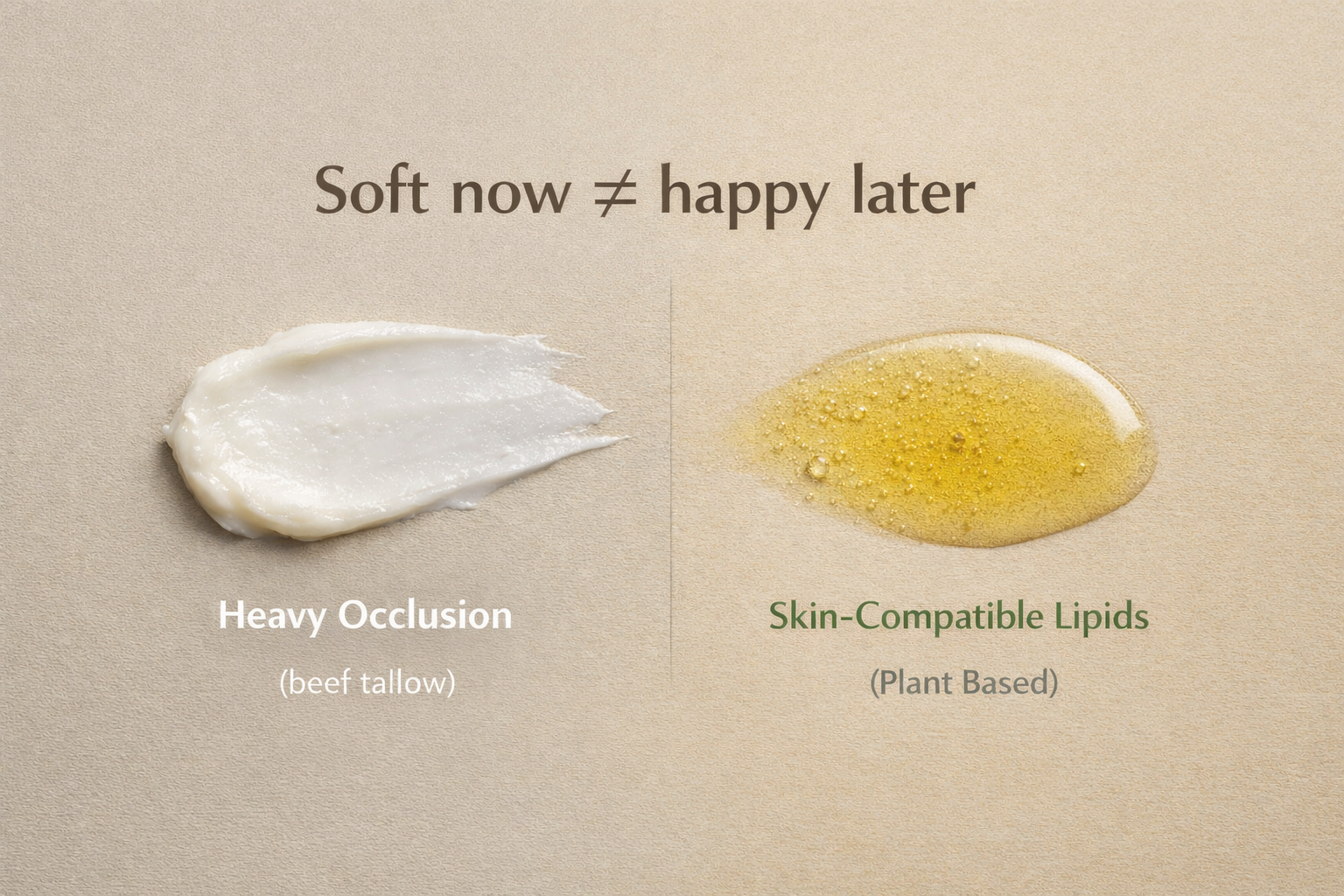
Left: Heavy Occlusive (tallow) Right: Plant Based Lipids (candelilla)
Who Should Be Especially Cautious with Tallow
Tallow may not be a great choice for facial skin if you:
-
Are acne-prone or get closed comedones
-
Have reactive or redness-prone skin
-
Deal with rosacea or inflammation
-
Wear makeup or sunscreen regularly
-
Live in warmer or more humid environments
- Don't want to constantly hear: "Where's the Beef?".
Patch testing matters, but so does watching your skin over time, not just the first few days.
Our Perspective
Cascadia Roots has been making skincare in Oregon since 2012. Our approach is shaped by three generations of beauty professionals, professional education, and lived experience with sensitive, allergy-prone skin.
We specialize in 100% plant-based skin maintenance for all skin types, with a focus on long-term calm, clarity, and barrier support. Every formula is vegan, cruelty-free, and made in a sustainable facility.
Trends come and go. Skin still works the same way it always has.
The Bottom Line
If tallow works for your body, that’s your call. For facial skin, especially sensitive or congestion-prone skin, it’s worth slowing down and asking better questions.
Soft right now is easy.
Calm long-term takes intention.
Below is a list of scientific studies that cover this topic in depth.
-
Tallow, Rendered Animal Fat, and Its Biocompatibility with Skin
A scoping review evaluating what research exists on tallow as a skincare ingredient — and highlighting how limited and inconclusive the evidence is.
-
Safety Assessment on Comedogenicity of Dermatological Products
Discusses comedogenicity concepts and how fatty ingredients can contribute to pore blockage and acne, with references to objective comedogenicity research.
-
The Primary Role of Sebum in the Pathophysiology of Acne
Peer-reviewed clinical discussion on how changes in sebum lipids relate to acne, which can help explain why heavy fatty applications can worsen blemish-prone skin.
https://www.tandfonline.com/doi/full/10.1080/09546634.2023.2296855
-
A Comparative Analysis of Beef Tallow and Plant-Based Oils
Scientific analysis comparing the biochemical profiles of beef tallow and plant oils, including implications for sensitive and oily skin types.
https://www.jdermis.com/full-text/rethinking-sustainability-in-skincare-a-comparative-analysis-of-beef-tallow-and-plant-based-oils
If you want help choosing plant-based options that work with your skin instead of sealing it in, that’s literally what we’re here for.